Search for a topic

Showing posts with label acupuncture. Show all posts

Tuesday, April 12, 2016

Your Body is a Garden

In a recent post about three different types of health care, I mentioned that the way we traditionally view the body here in the West is different from an Eastern approach.

Modern medicine (here in the West) pictures the body as a machine that is hijacked by disease. The picture of health is a well-oiled machine operated by you and supervised by your doctor.

A new way of looking at your body -
naturally
What if, instead of a machine, your body was a garden? If you imagine your body this way, your whole approach to health is changed. You stop fighting a war and start cultivating the life you want to live, in this body.

If you have a green thumb, you might know that your garden often takes care of itself. If it's dry, you may need to water it. Sometimes there are problems related to pests, nutrition, weeds... and sometimes it does feel like an all-out war. And yet, the garden does take care of itself as long as you provide it with enough fresh air, sunshine, water, and food.

Do you give those things to your body?

For so many of us, our bodies are withering away without the fundamental sources of life. So many people explain their symptoms away by saying, "I'm not getting any younger," but they would feel younger if they fed their body what it needs: Nutritious food. Exercise. Sunshine. Water.

This garden resembles what our bodies go through
when we don't give ourselves basic nourishment through
movement, nutrition, water, and sun.
A friend of mine recently lost 75 pounds. I asked her what she did to lose the weight, and she said, "You know, I did what we all know to do. I ate right. I got moving." While I celebrate her willingness to lose weight naturally, I also respect that my friend did what was right for her body. She listened to the messages her body was sending her and she followed its advice.

When you listen, your body will tell you what it needs, and you can fulfill those needs, all on your own. After all, you live there every moment. Every moment you have the opportunity to respond to those messages. It's tuning in that is often the problem for us. So how do you listen to your body?

This is where acupuncture comes in. Acupuncture will tune your mind in to the right frequency. People leave and tell me they feel so relaxed. It's because their mind is finally on the same frequency as their body. Your breath, your heartbeat, all are there to anchor you. There's no shame in getting carried away with thoughts and plans and feelings and drama. And yet there is always an invitation from your body. Come back, it says. Come back anytime.

With a little time and attention, our bodies can resemble
this well-cared for garden. 

Monday, March 21, 2016

5 Ways Acupuncture Can Save You Time

When people call me with questions about acupuncture, they usually ask me how much it costs. They ask me if I can really help them with their most pertinent health issues. They ask me if the needles hurt. However, I have found that these issues are not the biggest barriers to getting acupuncture treatment.

The biggest, most secret barrier is time.

So I'm here to help you answer the question amid your busy life, your kids, your job, your family, and your other healthcare options: Do you have time for acupuncture?

An acupuncture session lasts approximately 60-90 minutes. For those of us with busy lifestyles, that's a long time to sit still. Plus, you have a good amount of that time to yourself, listening to soft music or being in silence.

Can I really sit still by myself
for that long?
I occasionally have clients who are so nervous about the still/silent component that they request other activities during acupuncture. They would like to read. They would like to listen to the spoken word. They want me to talk to them, maybe to tell them exactly how they will get better. These are all cries for help from a brain that doesn't want to settle down.

Acupuncture sessions can
refresh you and improve
the quality of your sleep.
Here's why I encourage all my patients to dive in to the silent time of their acupuncture treatment.

  1. You would normally have to take a four-hour nap in order to get the refreshment of one session. (Most people rarely sleep during a session, by the way.) "I felt like I slept for several hours," is a common reaction that my patients have after getting off the table.
  2. You will sleep better regularly with these shortened "training" sessions, saving you hours of frustration in the night. This is especially true if you have racing thoughts or trouble turning off your mind at bedtime.
  3. You will not find a better opportunity to reset your brain and re-sync with your body. Your thinking and your emotions will be clearer and more defined - thus saving you from hours or even days of frantic or confused behavior.
  4. Because acupuncture stops pain and prevents future illness, you could save hours in the doctor's waiting room. Many of my patients report that while they continue to see their primary care physician, their visits are fewer because their symptoms are fewer.
  5. Fewer symptoms means less time in waiting rooms!
  6. Acupuncture sessions steer your body in the right direction without high risk or side-effects. By investing 60-90 minutes every week or two, you can decrease your dependence on medications that make you loopy or nauseated. You can avoid that surgery that would take weeks or months of recovery.

Acupuncture sessions offer you less time feeling stressed, poorly rested, and cooped up, and more time doing what you would rather be doing: spending time with your friends, enjoying your favorite hobby, staying caught up at work, and caring for your family.

There's never been a better time to try acupuncture, or to come in for a follow-up. Contact me at Lakes Area Acupuncture and let me save you some time and trouble.

Thursday, March 10, 2016

Three Ways Acupuncture Can Help You

When you're considering whether or not acupuncture is right for you, the answer to the question "How can acupuncture help me?" is vital.

The first thing I suggest is a free private consultation. If you talk to me directly, I can outline a treatment plan that is right for you. Your consultation might be completely different than if I talked to your friend, your spouse or another family member. The reason for this is that people seek acupuncture treatment for different reasons.

1. Symptom Relief - Many people just want relief from their symptoms. If the body is a garden, symptoms are burgeoning weeds that choke its natural beauty. Acupuncture and Chinese herbs cut back the weeds. I pride myself on my ability to relieve symptoms; for many of us, a good quality of life is about stopping pain and creating a sense of ease.

Here in the US, we tend to view the body as a machine that is often
hacked by a foreign enemy known as disease. Chinese medicine
focuses on the body as a garden that can be cultivated to heal itself.

2. Corrective Care - Corrective care is my specialty; it focuses on removing the cause of your symptoms. Underneath most pain is inflammation. Weight gain is a symptom of a metabolic disorder. Addictions are a combination of neurological and emotional imbalance. We could work on symptoms forever, but to provide long-lasting relief and freedom, corrective care is necessary.


3. Preventive Care - I have clients who attribute their continuing health to their investment in acupuncture. Assisting the immune system can prevent illnesses in the future. Balancing your health early will promote your well-being for months and years to come. Studies have shown that acupuncture clients report fewer symptoms years after the end of their treatment plan.

Whether you're thinking for the future or putting out today's fires, Lakes Area Acupuncture is here to help. During every session, you can count on attention to your needs at this specific moment, as well as a far-reaching vision of your overall health. It's never to late or too early to make the call.

Monday, March 7, 2016

The Science of Acupuncture: Overview

Acupuncture balances the health of the whole body while it stops pain, boosts metabolism, and eases stress. Instead of wondering if acupuncture works, scientists have been scratching their heads and performing studies to figure out how it works. They managed to develop six different theories that, combined, provide some light into the mystery of acupuncture.

Acupuncture....

Chinese medicine can view
disconnected symptoms
as related to one another
In the United States, we have specialists that bring to my mind the expression “the right hand doesn't know what the left hand is doing.” If I had carpal tunnel in my right wrist and arthritis in my left, for each wrist I might end up seeing two specialists that never speak to each other! Many people have trouble understanding acupuncture in the West because one treatment can work with so many systems at the same time. I am thankful that TCM has one-to-many correspondences, since we are able to treat multiple conditions with just a few needles.
Felix Mann aptly described acupuncture
point selections as "constellations."

With all the acupuncture points on the body, mapping their individual functions would take longer than mapping the human genome. Luckily you don't have to know what points you wish to receive before you go to the acupuncturist! Every point on the body has its own potential effects; the skill of your practitioner will determine where and how these effects are used to your benefit.

Acupuncture stimulates and regulates your body's natural response, creating improvement with no side effects. Every day, your body is fighting for its life and well-being, overwhelmed by stress and repetitive strain. Acupuncture stimulates your brain to reset and rewire the patterns of your natural functions. This is the same for every patient; the differences lie in the details and nature of the condition addressed.

Tuesday, March 1, 2016

Fresh Horizons, New Names

Thank you for being a part of my world. Your local acupuncturist is doing something new in 2016. You will have the opportunity to receive:
  • weekly tips on staying healthy with Chinese medicine
  • regular deals on acupuncture services, herbs and more
  • guided meditations to make your days (and nights!) easier
  • a direct line to professional answers for all your questions
I am now practicing as Lakes Area Acupuncture, but don't worry, you will get all the same benefits as you did when I was Danielle R. Hair, L.Ac.! I'm changing more than my business name and my last name (since I married the illustrious Cory Horton last year). While I grow, you'll get more value from acupuncture than ever before.

Are you ready? 2016 might be your healthiest year ever, with the help of Lakes Area Acupuncture.

Friday, November 30, 2012

Acupuncture Balances Neurotransmitter Levels

Because acupuncture stimulates the nervous system, it has a special effect on neurotransmitter levels. The neurotransmitters acupuncture affects most are seratonin and noradrenaline.

Neurotransmitters are essential
for building healthy relationships.
.
Seratonin is the nervous system's gauge for food intake. It moderates social interaction, and determines relationship behavior. Low levels of seratonin are linked to sugar cravings, depression, anxiety, OCD, and addictions.

Higher levels of seratonin are associated with calmness, optimism, and mindful reflection.

Noradrenaline, also known as norepinephrine, is a stress hormone that stimulates the fight-or-flight response. Chronically high noradrenaline levels produce adrenal fatigue and circulation problems.

The best acupuncture point to balance
neurotransmitters is located near
the base of the ear.

Lowering levels of noradrenaline allows the rest-and-digest response to activate. One point on the ear is called the 'autonomic point,' and it specifically balances these responses. This point is featured in a specialized protocol
used in addiction recovery all over the world.

After people receive acupuncture, their seratonin levels rise and their noradrenaline levels decline. This is why acupuncture is so effective for weight loss, mood disorders, and all kinds of addiction. It also explains why people feel so amazing after a session.

Tuesday, July 10, 2012

Nerve Gate Control with Acupuncture

"It is better to wound yourself a thousand times
than to do a single harm to another person."
-  Dr. Li Chang-yuan,
interviewed by James Reston in 1972
One of my patients was suffering from a toothache on top of her other ailments. She had a procedure that fixed her tooth problem, but her head was still aching.

I remembered that acupuncture can be used to bypass the nerves along specific pathways to stop her pain. During her treatment, I applied electricity to the acupuncture needles I had inserted for her toothache. Her pain immediately resolved, and she asked if my services would be available during her next dental procedure.

I was able to stop her pain so quickly because of the first powerful effect of acupuncture to catch the attention of the West.

A little history

Adding electrical stimulation to acupuncture points
interrupts the signal of pain in nerve gate pathways.
For many years, acupuncture in the United States remained an obscure, mysterious healing art. In 1972, a journalist named James Reston visited China on a mission of cultural enlightenment. While he had not planned on covering acupuncture specifically, Mr. Reston experienced Traditional Chinese Medicine first-hand when his journey was interrupted by an emergency appendectomy.

Amazed by his experiences in China, he returned to the US to be one of the first journalists to provide accounts of his acupuncture treatment and his observation of treatments performed by clinicians abroad. (If you'd like to read the original article, here's a free reprint.)

This diagram is linked to an article
on pain management using acupuncture.
Acupuncture is commonly used for analgesia in China, whether as a primary or secondary means of stopping pain during surgery. In some cases, acupuncture has been used as the only analgesic.

To explain how acupuncture stops pain, scientists introduced Gate Control Theory, which states that signals, which travel from the site of pain to the brain through high-traffic gates, can be moderated by influencing stimulation in corresponding tissues, such as with acupuncture. These gates can be overwhelmed by the acupuncture stimulation, and the result is no sensation of pain.

There are no drugs or other substances within the acupuncture needle; in order to achieve this powerful effect, the needles can be used alone or with added electrical stimulation.

Many amazed onlookers in the West have witnessed surgeries where the patient was awake and alert, their pain modulated by acupuncture. This is not a common practice in the West, yet it is a useful opportunity for patients who do not have the option of receiving anesthetic medications. It serves for the rest of us as a powerful example of how acupuncture stops pain.

Tuesday, June 26, 2012

Acupuncture Increases Circulation

Acu-points influence circulation by affecting
hormones like histamine to dilate and constrict
blood vessels in the affected area.
Specific hormones work together to govern blood flow in the body, but there is no single hormone that modulates circulation.

A familiar hormone may help us understand the relationship between circulation and acupuncture. Many of us seek to block histamine in our respiratory systems; we use anti-histamines to cause the blood vessels to constrict so we don't feel swollen and snotty with allergies. Histamine can be very useful in combination to relax vessels and push the blood flow to an area.

Chinese medical concepts
may seem esoteric, but
they produce real, metabolic
results.
As blood reaches the site we are stimulating with acupuncture, it carries immune components, endorphins, and other beneficial compounds like vitamins, fats, and blood constituents. Once we have created the proper building blocks for healing, acupuncture directs the blood flow to the parts of the body where it is most needed, improving the circulation of the entire body. Sometimes, a specific area is involved – for example, the back, knee, and neck are all areas where the blood flow has commonly been reduced to a trickle. And one can feel it, whether as a direct source of pain or through indirect means, like edema (swelling), numbness, or tingling.
Often in response to poor circulation, it's easy to further decrease that circulation by applying ice, consuming numbing medications, or using compression socks. Unfortunately, this begins the process of removing circulation from the extremities, killing the nerves and causing muscle atrophy from mis- or dis-use.

As a licensed acupuncturist, I highly recommend stimulating the circulation to painful, numb, and swollen areas with acupuncture and the complimentary aspects of Traditional Chinese Medicine before seeking more drastic means to inhibit these symptoms. Reducing circulation creates a great deal of side effects which can be irreversible, while acupuncture poses minimal risks in comparison.

When structural problems interfere with
circulation, we can use acupuncture to
direct blood flow where it's needed.
One of my patients experienced severe tennis elbow, and he was instructed that he could only receive cortisone shots, pain medications, and surgery for his condition. During his first visit, I could quickly see that his elbow pain was related to severe circulation problems in his spine, specifically referring from his neck. I informed him that I would need to address both his neck and his elbow in order to reduce the pain. Additionally, because his neck had bone spurs, I could only affect his circulation around these structural conditions.

The patient had substantial relief after the first session, which became exponential as his treatment plan progressed. While I could not change the shape of his neck, I increased the circulation within and reduced his inflammation by positively influencing blood flow in his neck, thus stopping the elbow pain.

Read more about the mechanisms of acupuncture in this excerpt from the American Journal of Acupuncture.

Tuesday, June 12, 2012

Acupuncture Releases Endorphins

Endorphins are released while
running from monsters
Athletes and exercise enthusiasts are well familiar with the function of endorphins. Once an athlete reaches an exhaustion level, they experience a feeling that some have dubbed, “runner's high.” This could apply to any physical exercise. This euphoric, whole-body feeling comes from endorphins, which are released in order to allow the body to endure longer periods of strenuous activity than normal. In the prehistoric human body, endorphins were developed for long periods of flight from large, powerful predators, enabling humans to survive hazardous over-exertion by stopping pain associated with over-extended tissues and organ systems.

Endorphins are released when
eating spicy foods
Pain killers represent the most popular group of drugs on the market. From headaches to knee pain, everyone is looking for a solution to their pain. Multi-million dollar clinics are opening under the title “Pain Management.” While these solutions (namely drugs and surgery) help to manage pain, acupuncture stops it completely. Long-term studies detailing the results of acupuncture treatment for pain showed significant improvement in patients who completed their treatment plan, even years after their last acupuncture treatment. (Here's an example.)

Endorphins are released
in response to pain
Acupuncture is able to stop pain better than most drugs because of the body's natural endorphins. Acupuncture unlocks a dormant quality within the body, which, when activated, operates at a strength ten times any drug on the market. For example, researchers at UNC are using acupuncture instead of spinal injection to increase the effectiveness of a new drug. Unlike more publicized options, acupuncture is safe and causes no side effects.

The effects of acupuncture on pain are immediate. A patient called me in significant pain from a sprained wrist. I quickly applied acupuncture and asked him to rotate his wrist at the end of the treatment. His expression brightened and his eyes became wider as he was able to not only move his wrist without pain, but also with a significantly larger range than when he had first strained it just a few hours earlier. I continued to apply acupuncture and added an herbal compress to increase his circulation and heal the wrist completely, but acupuncture brought him immediate relief from pain that he did not hope to expect.

Tuesday, May 22, 2012

Acupuncture Augments Immunity

It's no secret that acupuncture has been effective in treating allergies of many types, from allergic rhinitis to hay fever. The appearance of allergies can be traced to one of two primary mechanisms. Either the body's immune system is hyperactive, attacking particles and substances that pose no substantial risk, or the immunity can be weak, not responding to manageable levels of bacteria and viruses when they attack.

If your body's environment is hospitable,
the seeds of disease will grow.
As an acupuncturist, I must emphasize that both the physical body and the external environment have a significant bearing on your body's immune response. Focusing on the “offending particles,” as we often do in sterilization procedures and pasteurization for example, creates a sterile environment in which the immune system atrophies. Practical sanitation creates a positive atmosphere for the immune system to flourish; hand-washing and cleaning surfaces with soap revitalize this atmosphere. With a healthy immune system, only rarely will you need to use harsh chemical disinfectants to purify your environment.

Before Louis Pasteur died, he may have admitted that his life's work was short-sighted. (I'll paraphrase, but here's a good account of his debates with Claude Bernard.) “I was focusing on the seed,” he said, “when I should have been focusing on the soil.” The “soil” of which he spoke is your body's immune system. Pollens, molds, bacteria, and viruses can try all day to break a healthy immune system, but they will fail every time.

Acupuncture greatly improves the activity of your immune system by increasing your body's production of white blood cells, immunoglobulins, prostaglandins, and antibodies.
  • White blood cells identify the foreign particles in your body and eliminate them. Your doctor will test your white blood cells to evaluate your immune response at a given moment. White blood cells are action-oriented, and they are prepared to neutralize infections wherever they flow. Acupuncture increases the effectiveness of your white blood cells for a shorter recovery time.
  • Antibodies make a note of these foreign particles so that they can be recognized faster in the future. They remind me of the expression, “Once bitten, twice shy.” Antibodies are the reason you don't get chicken pox twice. Viruses like influenza mutate and change frequently in an attempt to fool our antibodies. With the proper disguise, they might delay the response of the antibodies, and the body's “alarms,” typified in responses such as fever, flooding of white blood cells, and other classics, may occur after the virus had time to cause some damage.
  • Important immunoglobulins are available through your mother's placenta before you are born, and afterward you drink it in breast milk. Immunoglobulins are the foundation of your immune system that are passed down from previous generations through maternity. Acupuncture increases your access to immunoglobulins and releases them into your system.
  • Prostaglandins mediate the contraction and relaxation of muscle tissues. When you get a cold and your body starts to hurt, your prostaglandin balance has been disrupted. It feels good to get acupuncture because it optimizes this balance, even when you're not feeling ill.
As a result of the immunity augmentation associated with acupuncture, people who complete acupuncture treatment plans do not get sick as often, have reduced allergic reactions, and enjoy fewer complications related to a weak immune system.

Monday, April 16, 2012

Acupuncture Alphabet

Traditional Chinese Medicine is such a long phrase that I often abbreviate it as “TCM." It's no wonder that people commonly refer to acupuncture and TCM as being interchangeable simply because of the length of the name. I grew up singing a song called “Eddiegutchaketchicamma-tosinaratosinoka-sammacammawackybrown,” which tells the story of a boy who drowned in a well because his name was too long to spread the word that he needed help. Sometimes I think TCM has the same problem. Even shorter words like acupuncture are still quite a mouthful!

TCM, OM, AOM... Acupuncture terminology
will mix you up like alphabet soup!
For this reason, acupuncturists often abbreviate words so our patients don't drown in a well of pain before we get our point across. We're left with a confusing alphabet soup of anagrams: TCM (Traditional Chinese Medicine), OM (Oriental Medicine), AOM (Acupuncture and Oriental Medicine), and many others. For simplicity's sake, I will be using TCM to refer to all of these abbreviations, while recognizing that the American acupuncturist's TCM is a melting pot, combining many aspects of traditional medicine in Asia and even Europe. Acupuncturists use some strategies that are thousands of years old, while others are only a hundred, or fifty, or even modern. In every case, I use time-tested, established methods that have been proven in case after case.

Acupuncturists in the US possess a comprehensive combination of therapies to more fully understand and service their patients' needs. It's common to consider acupuncture as being synonymous with TCM, but actually, acupuncture is just one of the important pillars of TCM treatment. Because practitioners are focused not only on stopping pain and other symptoms, but also on the prevention of their return, we rely on the combination of acupuncture with herbal therapy, nutrition, massage, and home care to provide long-lasting results. (Here's one example.)

Your recovery period need not
last an eternity.
Many people who are new to acupuncture are concerned that the relief will only be temporary and that they will have to return for treatment indefinitely. Some medical professionals who practice acupuncture but are not fully trained to do so may use acupuncture in this way – for the temporary relief of symptoms. Licensed acupuncturists like myself are trained to address conditions with the full complexity of TCM; we understand that the solution to your condition is pain-free independence, as well as the freedom to live your life. For more information on getting results with your acupuncture treatment plan, see my article on getting timely results with acupuncture.

Friday, March 23, 2012

Timely Results with Acupuncture

One of the most common questions I get as an acupuncturist is, "How many treatments do I need?" I like this question, because it speaks to the part of us that's ready to move on with our lives. It's essentially asking, "How long do I have to put up with this?"

I'm in the position to cheer that part of you on, and I'd like to give you some  idea of how long you can expect to use acupuncture for a given condition. This is a ballpark figure, and your individual response will depend on your own state of health and the combination of factors involved in your condition. You can, however, expect to be presented with a treatment proposal that will be customized to you.

Let's review the conditions for which acupuncture has been proven effective:

Stress Digestive Respiratory Pain Women’s Health
Emotional Distress Nausea Asthma Joint Pain Infertility
Depression Vomiting Sore Throat Bone Pain PMS
Anxiety GERDs Cold/Flu Nerve Pain Menstrual Disorders
Insomnia Gastritis Headaches Dental Pain Menopause
Smoking Cessation Diarrhea Pneumonia Cancer Pain UTI's
Addictions Constipation Tonsillitis Sciatica Incontinence
Dizziness IBS Sinusitis Arthritis Endometriosis
Fatigue Colitis Rhinitis Tennis Elbow Uterine Bleeding
Weight Management Chron's Disease Allergies Headaches

Hiccups Ear Infections TMJ

Morning Sickness Bronchitis Chronic Fatigue


Fibromyalgia


Peripheral Neuropathy

For stress and the related symptoms, your investment of time is in a direct relationship to how long you've had the condition. In other words, it's good to come in early, because your recovery time will be shorter. Acupuncture for stress ailments will have an immediate relieving effect. For short term conditions in this category, four treatments in 1-2 months are enough to get you back on track. On the other hand, I see people all the time who have struggled with stress conditions for their entire lives. Eight treatments in two months brings the transformation they're looking for, followed by four treatments in two months to ensure long-term success.
The digestive category is almost identical to stress; I am certain it is because the two are so deeply related. Exceptions are vomiting and hiccups, which will find immediate relief from a single treatment. Morning sickness may require continued attention through the second trimester.

For respiratory conditions, the treatment is two-fold, between prevention and management of attacks. Depending on the condition, it could take 1-4 weekly treatments to manage the attack, before prevention is addressed, usually in 6-8 treatments over the following 2 months. If the issue is seasonal, prevention may need to be addressed 1-5 times annually.

Pain is categorized by chronic (over 1 month old) and acute (under 1 month old). Pain relief is often immediate with follow-up treatments to lengthen and strengthen that relief. Just like with stress conditions, four to twelve treatments in one to four months is the range depending on how chronic the condition is. If you have a severely chronic or degenerative condition, your plan will include suggestions for long-term care.

In Women's Health issues, treatment plans often revolve around your menstrual cycle, especially in cases of PMS, infertility, endometriosis, and uterine bleeding. With these conditions, you will ideally be treated just prior to ovulation and just prior to scheduled bleeding, meaning at least 2 treatments per month for 3-6 months.

Monday, March 5, 2012

Adding Acupuncture for Total Health Care

Acupuncture can help to improve your quality of life in a way that no therapy originating here in the West has been able to do. Like many acupuncturists, I trained vigorously for four years, learning about not only the standard body systems and common methods of clinical care, but also about the body's energy system and comprehensive care. This Chinese medicine is the frontier of how we perceive health care in the United States; however, doctors are often happy to recommend acupuncture because they have seen it help improve their patients' quality of life.

Acupuncturists like me often see people at their wit's end, where they have been prescribed strong medications and recommended to have major surgery to address their pain. Because acupuncture has no side effects and poses a very low risk to health, those who suffer from pain find Traditional Chinese Medicine to be a safe, effective solution.

I believe that understanding the fundamental concepts of this medicine will provide you with a deeper knowledge of how your body works naturally. These concepts, like wholism and the energy system, are what I see missing from the current biological model that we practice today. If you have gone to your doctor confused and lost, and come away feeling like the treatment administered was not right for you, you have just touched upon these missing links between your body and the strategies that we have developed without the comprehensive Traditional Chinese Medical system.

These missing links mean that TCM is needed here in the US, not to replace your regular doctor, but to complement your health care effectively. While there are some fundamental differences in these systems, I hope that they never operate exclusively from one another. Acupuncturists want to improve your quality of life; we also want you to continue seeing your doctor. Being assessed by your medical doctor is vital to your health; seeing an acupuncturist is vital to your well-being. I tell my patients that I am pleased to be a part of their therapeutic team – without a team of medical professionals, we could both be overwhelmed.

Acupuncturists want to help you get better
in a team with other medical professionals.
In fact, you may be overwhelmed with pain, discomfort, weight gain, stress, digestive problems, sleeplessness, and many more conditions. These are signs that you have entered a stage in which acupuncture can be very effective. You may have decided to just live with your pain, because you experience side effects when taking medications, or you have been told that surgery is the only answer. The good news is that acupuncture can stop your pain, reduce your body's response to stress, ease your digestion, balance your metabolism, and help you calm down and rest. An acupuncturist like myself will work with you as a unique individual and start a treatment plan that will show you the results we can offer. I use time-tested, painless techniques to help your body heal itself. This natural restoration may have been dormant in you for some time – in fact, you may feel that your body is actively working against you! My patients who have problems with their immunity and allergies often mention this feeling. Again, there's good news – your body has been working very hard, but it may have been distracted, overloaded, or unduly stressed. I appreciate the change that occurs in someone's life when their body comes back into balance with Traditional Chinese Medicine, and they have a powerful experience of seeing their body working for them again.

My words cannot replace the experience of acupuncture treatment and individual consultations with a licensed professional. I encourage you to seek contact with an acupuncturist who can speak clearly with you about your condition in specific terms; moreover, I encourage you to participate in a treatment plan, because in this way, you can see what acupuncture can offer not only to you, but to your entire community. Please contact me directly if you would like to know more about what I do in Austin. I always find time to help others on the path toward better health with Traditional Chinese Medicine and acupuncture.

Wednesday, February 22, 2012

What I Do

Despite our best efforts to pin down the details, our relationships to our bodies can be elusive and mysterious even in these modern times. Sometimes a missing link within the body's natural patterns can present as pain. At times, the pain moves. Other uncomfortable symptoms may appear, like tightness. Sometimes, the miscommunication will affect entire body systems, inducing insomnia, stomach ache, dizziness, depression, or other discomforts. 

I help people discover how the disconnection occurred - sometimes it's obvious like an accident, while other times the origin is more subtle. I treat with acupuncture based on the most effective way to restore vital communications by balancing the body's hormones and neurotransmitters. Once the acupuncture points start "talking" (a term describing the sensations when acupuncture points are stimulated), then all the body's systems can start to work together in the pursuit of whole-body health.

More about Acupuncture

Tuesday, January 31, 2012

A Pain Relief Story

I recently treated a woman for neck pain who was unable to turn her head to the right or left. She was in a great deal of pain, and it was affecting her ability to live her life.

After speaking with her in detail about her current state of health, I used acupuncture to stop her pain, reduce her tension, and give her more mobility in her neck. She made some dietary changes because we found that she was not getting enough proper nourishment. I added herbs to improve the circulation throughout her whole body, as well as stimulate her digestion to facilitate the delivery of important nutrients to the tissues in her neck and shoulders.

We also covered some exercises that she could apply to reduce the strain on her neck and upper back. After the first treatment, her pain level reduced to zero, and she was able to enjoy her full range of motion. The steps we took from her first treatment gave her long lasting relief and prevented the injury from recurring.

This patient was able to move from immobilizing pain and tightness into relief and relaxation because we explored the totality of what Traditional Chinese Medicine has to offer, including and beyond acupuncture. In my commitment to assess her as a person and not just a disease, I was able to identify the source of her pain, rather than just treat her symptoms repeatedly.

If you have pain that keeps returning no matter what you do, the source of that pain needs immediate attention. I am available to answer your questions so that you know what to expect when starting your recovery with acupuncture.

Friday, January 27, 2012

Allergy Season: Cedar

With a pollen production schedule from November through February, cedar (AKA mountain cedar, or juniper) can create a miserable winter for Austinites. The pollen attaches itself to the mucosal lining of your eyes, nose, and throat, giving rise to nasal congestion, sneezing, itching, and sore throat.

You can reduce symptoms by doing some extra house cleaning and bathing yourself and your pets frequently. You can also prepare and manage your immune system internally with acupuncture and Chinese herbs.

Acupuncture increases the presence of immunoglobulins in the bloodstream. Immunoglobulins are the blueprint for our immunity that we carry from birth. They contain information that allows our system to differentiate between pollens and pathogens.

Cedar irritates and confuses the immune system once it has become sensitized. Some people move to Austin and become sensitized immediately, while others take 1, 2, up to 7 years to do so. After years of regular suffering with only symptomatic treatment, people experience a desensitization; their immune system eventually gives up and lives with the cedar pollens.

Acupuncture can help you skip the 7 years it could take to desensitize your reaction to cedar. By releasing immunoglobulins, acupuncture helps your body identify a real pathogen (such as influenza) as opposed to an allergen. After completing a treatment plan with acupuncture and herbs, most patients are able to manage the occasional reaction by simply washing their faces and hands.

Monday, October 10, 2011

When to Get Acupuncture


Based on clinical experience, the World Health Organization (WHO) recommends that acupuncture is a beneficial treatment for the following conditions.

Similar to the dashboard on your car, which lights up when it needs special attention or maintenance, this list is the dashboard of your body. If you have symptoms that correspond with the following conditions, it is a good indication that you need to see an acupuncturist. To contact me for an appointment, see here.

Acupuncture is effective with:

Stress Digestive Respiratory Pain Women’s Health


Emotional Distress Nausea Asthma Joint Pain Infertility
Depression Vomiting Sore Throat Bone Pain PMS
Anxiety GERDs Cold/Flu Nerve Pain Menstrual Disorders
Insomnia Gastritis Headaches Dental Pain Menopause
Smoking Cessation Diarrhea Pneumonia Cancer Pain UTI's
Addictions Constipation Tonsillitis Sciatica Incontinence
Dizziness IBS Sinusitis Arthritis Endometriosis
Fatigue Colitis Rhinitis Tennis Elbow Uterine Bleeding
Weight Management Chron's Disease Allergies Headaches

Hiccups Ear Infections TMJ

Morning Sickness Bronchitis Chronic Fatigue


Fibromyalgia


Peripheral Neuropathy

Tuesday, June 28, 2011

Acupuncture and the Brain

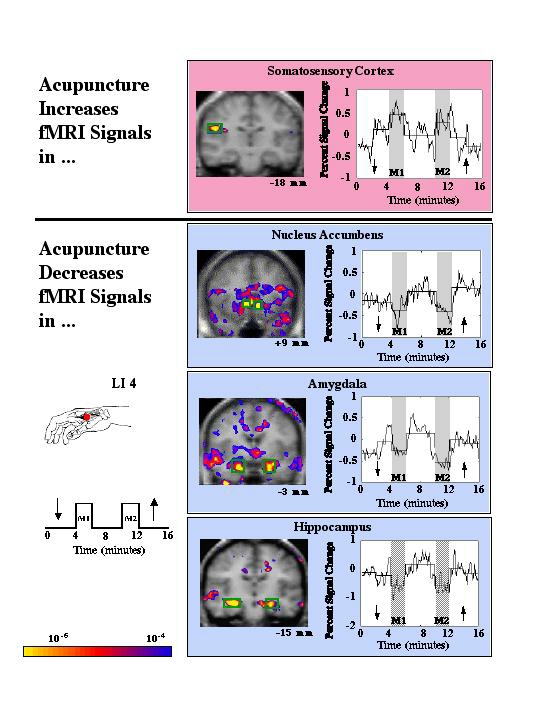
Skeptics always ask about acupuncture's effects on the brain. I once had an friend who wouldn't get acupuncture unless there were F-MRI's showing the exact effect on the brain for every acupuncture point. As my sports coaches used to say, "You can go a lot further than you think you can."

Harvard's F-MRI imaging and report details
the brain's response to a commonly-used
acupuncture point.
Let's go back to the need for proof. F-MRI reports from acupuncture sessions are expensive, and so these studies aren't performed on as many people or the way everyone would like, but they have been informative. Many show that the brain responds ipsilaterally, or on the same side, to the acupuncture point. This is a surprise to researchers who expected acupuncture to affect the body like any other pin-pricking sensation, in which the signal would travel and stimulate the contralateral, or opposite, side of the brain. (The image below is from the Harvard Study in 'ot seven.)
In Chinese Medicine, there is no separate system of nerves, although the brain is recognized as one of six "extraordinary organs," along with marrow, bone, uterus, vessels, and gallbladder. What these "organs" have in common is that they all house or facilitate the movement of a refined substance. The lack of a separate nervous system receiving sensory input and issuing commands to the body leads many acupuncturists to believe that the channels are conceptualizations of nerves and their relationship to all tissues. Still, conventionally accepted explanations of how acupuncture works almost always mention communication between the central and peripheral nervous system.

Wednesday, June 22, 2011

Acupuncture Meridians and Shiva Nata

"...performing such movements sets a series of alternating active and passive fragments of the energy flow. These energy impulses purify energy channels and balance the circulation of energy inside them." - Andrey Lappa, the man who systematized Shiva Nata
I began teaching classes because I want my patients to practice Shiva Nata. We are always working with the meridians of our bodies. These landmark pathways are also known as channels or vessels, and they are the primary means by which acupuncture affects the body.

In acupuncture, we place needles at a location and depth which is indicated to promote the balance of hormones, endorphins, immunoglobulins and circulation. A point's indication depends on three main qualities: its immediate location, the meridian pathway, and its category (a combination of depth and connectivity to other meridians and branches).

The meridian pathway is essential to any acupuncture point's function. The best resource to explore while learning about how Shiva Nata affects the meridians would be to learn the meridian pathways. Instead of seeing meridians as energy channels that float on the surface of the body, we could see them as embedded in all our tissues to the deepest level. Once you are familiar with the pathways of the primary organ systems, you can foster an understanding of how these movements activate and strengthen their relationship.

When we practice, our focus is on twisting, flailing, and ultimately balancing those meridians. We rotate the arm channels on all axes. Shiva Nata powerfully supports this balance because it addresses all of the meridians - as opposed to most of our activities, which focus all our energy into one, two, or a handful of positions and movements. Balance can be achieved because no channel is left unused, unstretched, or unrotated. The meridians are activated either by a relative emphasis on the energetic meridians or the physical structures that they involve.

The path learning Shiva Nata combines all possible movements of all the meridians in a balanced and coordinated way. Horizontal arms 4 is a strong position for the heart and lung channels - meaning there's effort and tension in those systems when it is held. Moving from 4 to 3 horizontal is a rotation that integrates the large intestine and small intestine channels. According to Chinese Medicine, the heart and small intestine, and the lung and large intestine are intricately related to one another, and they work "as a husband and wife." Moving from horizontal 4 to 3 strengthens this relationship, and practicing this movement and its derivations could repair a damaged relationship between organ systems to restore balance.

I am not so far as to diagnose a complex syndrome based on level-related struggles or prescribe certain movements to harmonize dissonant organ system patterns. We have barely begun.

Monday, May 16, 2011

NADA Protocol

NADA (National Acupuncture Detoxification Association) protocol - an acupuncture detoxification protocol using five points in the ear to regulate the body's deeper response to stress and withdrawal. NADA works by stimulating the vagus nerve; it is the longest nerve in the body and flowers open at the ear, connecting deep structures and complicated feedback loops in one convenient spot.

I've had success using NADA in treatments for smoking cessation, substance abuse recovery, and psychological healing.

Check out what NADA says to do after putting needles in:
"...the client (in most circumstances) relaxes quietly in a comfortable chair."
If you're tired, if you haven't eaten, or if you're wearing jeans, I understand the need to have a seat. Better yet, make an appointment with me, and you'll get an in-depth consultation and a refreshing nap!